

In one of the most severe crises in the history of the Alliance, NATO stands on the brink of fragmentation as a series of unpredictable developments have caused deep rifts between member states. At the heart of the crisis are the United States and Spain, with Washington supporting the expulsion of Madrid from the alliance and US President Donald Trump declaring a trade war. Simultaneously, French President Emmanuel Macron has urgently called for the defense of the rules of international law.
An unprecedented diplomatic tremor
The crisis ignited following bilateral tensions between the US and Spain regarding military bases and spending obligations, culminating in public confrontations. Washington accused Madrid of "violating NATO obligations" and demanded Spain's departure from the Alliance, an action considered unprecedented. Concurrently, Donald Trump, reactivating his aggressive policy agenda, declared a trade war on Madrid, further fracturing relations within the Atlantic Alliance.
‘We will stop all trade’
Donald Trump stated that the US would cease trade with Spain, accusing Madrid of failing to meet its commitments. "They were the only country in NATO that didn't agree to raise spending to 5%. They wanted to stay at 2%, and they don't even pay the 2%. Therefore, we were going to cut off all trade with Spain," he characteristically stated. The American president even left open the possibility of Spain’s expulsion from NATO, labeling the country a "laggard" in defensive duties. He had already warned Madrid with a "reprimand" as early as October 2025 regarding military expenditures.
Madrid’s response
The Spanish government reminded that any revision of trade relations must respect the international legal framework and the autonomy of private enterprises. It emphasized that Spain remains a reliable trading partner for 195 countries, including the US, and a vital member of NATO with a substantial contribution to European defense. Diplomatic sources note that the EU is monitoring the situation closely, as a US-Spain rupture would have broader consequences for transatlantic ties.
Disagreement over military bases
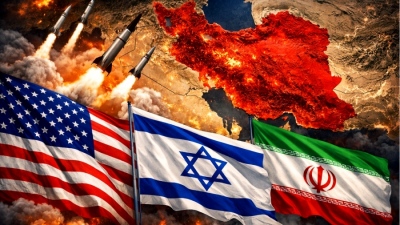
Tensions escalated when Spain, having condemned the strikes against Iran, refused to allow the use of jointly managed military bases for American operations. Foreign Minister José Manuel Albares confirmed the decision; according to Reuters, 15 US aircraft departed from the Rota and Morón bases, with at least seven landing at the Ramstein base in Germany. Donald Trump called Madrid's stance "horrible," even hinting at sovereignty issues. "We could use them if we wanted to—we could just fly there and use them. But we don't need them," he said.
Macron: France does not approve of US and Israeli actions against Iran
French President Macron did not support the military operation by the US and Israel against Iran. "It was carried out outside the framework of international law, which we cannot approve," he stated in an address to the nation. Macron also blamed Tehran for the escalation, claiming it is developing a dangerous nuclear program and funding terrorist groups. He believes sustainable peace is only possible through diplomacy, adding that a potential Israeli ground operation in Lebanon would be a "strategic mistake." Meanwhile, Paris has deployed Rafale fighters and missile defense systems to allied airports in the Middle East.
Fire directed at the United Kingdom
The American president also criticized British Prime Minister Keir Starmer, expressing dissatisfaction over the decision to transfer the Chagos Islands to Mauritius—the location of the strategic Diego Garcia base. "He’s no Winston Churchill," Trump remarked mockingly. Although London reportedly hesitated initially to allow the use of its bases, it ultimately gave its consent.
NYT: Merz defended Spain and the UK, sparking Trump’s ire
A new source of friction in transatlantic relations was revealed by The New York Times, reporting that German Chancellor Friedrich Merz annoyed Donald Trump by defending Spain and the UK as reliable allies. According to the report, during their March 3 meeting in the Oval Office, Merz stood by Spain during a discussion that turned into a "lecture" by Trump. While Trump praised the German Chancellor as a "friend," Merz reportedly kept a low profile publicly but intervened privately.
Private intervention and reaction
As the newspaper notes, during a subsequent lunch, Friedrich Merz privately defended Spain and the United Kingdom as important allies of the United States. This position reportedly triggered a strong reaction from Donald Trump. The German Chancellor later stated that he chose not to escalate the discussion publicly, adding that the American president’s criticism of European allies was, in his view, unjustified.
Risk of NATO destabilization
The confrontation has provoked intense reactions within NATO, with many member states calling for calm. Some Baltic and Central European states, worried about collective defense, have reaffirmed their commitment to Washington. Other countries, however, appear divided on the stance they should take toward the US. Sources from Belgium and the Netherlands report behind-the-scenes discussions regarding NATO reforms and the limits of American influence on strategic decisions. If the US persists, it may challenge not only Europe's security architecture but the very idea of a unified collective defense system in the post-Cold War era.
www.bankingnews.gr


Σχόλια αναγνωστών